What's Actually Changing
Bitcoin's block reward halves every 210,000 blocks — a rule written into the protocol since 2009, not a policy decision anyone can move. The 2024 halving dropped the reward from 6.25 BTC to 3.125 BTC. The next one hits at block 1,050,000, currently estimated for mid-April 2028 (CoinWarz halving tracker, which projects April 15, 2028, based on the ~10-minute average block time). That date will keep drifting by a few days in either direction as actual block production runs slightly ahead of or behind the 10-minute average — it is an estimate, not a fixed calendar entry, and won't be exact until the network is within a few weeks of it.
When it happens, the block subsidy drops from 3.125 BTC to 1.5625 BTC per block. Mining revenue per terahash is cut in half overnight, independent of what BTC's price happens to be doing that week.
What Past Halvings Actually Did
2020: Reward cut from 12.5 to 6.25 BTC. Network hashrate dipped roughly 10% temporarily as the least efficient miners went offline, then BTC price rose sharply over the following year, restoring — and eventually exceeding — prior profitability for operators running efficient hardware.
2024: Reward cut from 6.25 to 3.125 BTC. Hashrate stayed comparatively stable this time. Price appreciation offset the reward cut faster than in 2020, and by then efficiency had already become the dominant survival factor rather than an optional edge — the network had matured past the point where inefficient hardware could coast on cheap electricity alone.
The pattern across both events: efficient hardware survives the immediate shock; inefficient hardware gets forced offline. Price recovery timing is never guaranteed to arrive fast enough to save a marginal operation, so the halving is a hardware and cost-structure problem first, and a price question second.
Why Efficiency Matters More After a Halving
This is the mechanical part, and it's worth spelling out rather than taking on faith.
A miner's revenue is roughly: (its share of network hashrate) × (block reward) × (BTC price), paid out continuously as blocks are found. Its cost is: (power draw) × (electricity price), running continuously regardless of reward.
A halving cuts the reward term in half. It does not touch the cost term at all. A miner's J/TH figure — joules of electricity per terahash of hashing power — is the only variable in that equation that determines how much cost a given unit of revenue has to cover. Two miners producing identical hashrate, therefore identical BTC-denominated revenue, can have wildly different power bills depending on efficiency alone. After a halving, that gap in power bill stays exactly the same in absolute terms, but the revenue it has to be paid out of just got cut in half. A miner sitting close to breakeven before the halving is very likely operating at a loss the moment after it, purely from the reward cut — no price move required.
That's why efficiency (J/TH) is the number to plan around, not a spec-sheet curiosity. It is the only lever a buyer controls that survives a halving unchanged.
The Efficiency Threshold for 2028
| Electricity Cost | Required Efficiency | Outlook |
|---|---|---|
| $0.03/kWh | Under 20 J/TH | Comfortable |
| $0.05/kWh | Under 16 J/TH | Workable |
| $0.08/kWh | Under 13 J/TH | Tight |
| $0.10/kWh | Under 11 J/TH | Marginal at best |
These are rough operating bands, not guarantees — actual breakeven also depends on difficulty and BTC price at the time, both of which are unknowable this far out. What's knowable now is your own hardware's J/TH number against your own power rate, which is why the table is framed around a fixed number (efficiency) rather than a moving one (price).
In-Stock Hardware Ranked by Efficiency
Live figures from our catalog, sorted by J/TH — the lower the number, the more halving headroom the machine carries.
| Model | Hashrate | Power | Efficiency | Price |
|---|---|---|---|---|
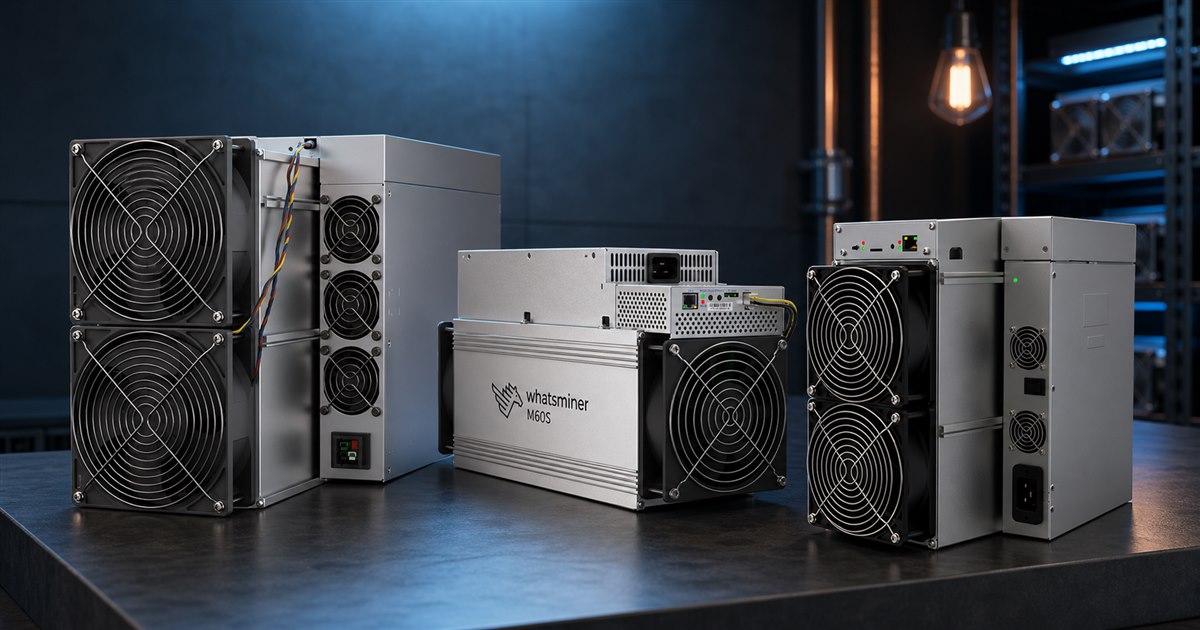
| Bitdeer SealMiner A4 Ultra Hydro | 886 TH/s | 8,372W | 9.45 J/TH | $9,999 |
| Antminer S23e Hydro | 540 TH/s | 5,400W | 10.0 J/TH | $7,200 |
| Antminer S21e XP Hydro | 480 TH/s | 5,280W | 11.0 J/TH | $5,400 |
| Avalon A1566HA | 480 TH/s | 5,400W | 11.3 J/TH | $2,520 |
| Whatsminer M66 | 298 TH/s | 3,560W | 11.9 J/TH | $2,700 |
All five sit comfortably under the 13 J/TH mark that keeps even $0.08/kWh power tight-but-workable through the 2028 cut. The Avalon A1566HA is the standout on price-to-efficiency — a sub-12 J/TH machine at roughly a quarter of the flagship hydro units' cost, which matters if you're buying multiple units rather than one. Full current stock, including air-cooled and immersion options, is on the shop page; use the compare tool to line up specs side by side, or the profitability calculator to model a specific machine against your own power rate.
How to Actually Prepare
1. Upgrade Hardware Before, Not After
Efficient units in the sub-15 J/TH range give real margin against the 2028 cut. Waiting until after the halving to upgrade means running at a loss during the transition. Plan hardware refreshes 12-18 months ahead, not reactively — and expect lead times and prices on the most efficient units to tighten as the date gets closer and every other miner has the same idea.
2. Lock In or Improve Electricity Costs
Every fraction of a cent per kWh matters more post-halving than pre-halving, because it's now being paid out of half the reward. Renegotiate industrial rates where possible, or evaluate solar or other renewable supplementation now rather than under post-halving financial pressure.
3. Build a Cash Reserve
Save a meaningful share of current profits specifically to cover 3-6 months of reduced margin through the transition. Miners who enter the halving with reserves have far more room to wait out short-term unprofitability than those who don't — this is the single most common reason marginal operations fold in the months right after a halving, not the hardware itself.
4. Diversify Revenue Where Possible
Heat recovery, demand-response programs, altcoin mining flexibility, and hosting services all reduce total dependence on pure block-reward economics. None of these replace efficient hardware — they buy time and reduce risk around it.
Shipping, Warranty, and Buying Ahead of 2028
If you're planning a hardware refresh ahead of the halving rather than after it, the logistics are worth knowing up front. We ship worldwide via DHL — flat $150, free on orders over $5,000 — so bundling a multi-unit order timed to your 12-18 month upgrade window is usually the more efficient route than buying one machine at a time.
Every unit carries its manufacturer warranty (6-12 months depending on model), and can be extended to 18 months through our paid Premium Guarantee at checkout. For hardware you're planning to run through 2028 and beyond, the extended coverage is worth weighing against the unit's price — it's a small fraction of the machine's cost against multiple years of runtime.
The Bottom Line
The 2028 halving isn't a surprise. It's on a known protocol schedule, currently estimated for mid-April 2028 at block 1,050,000, and the efficiency math behind it is knowable well in advance. Miners running genuinely efficient hardware and reasonable electricity costs will very likely remain profitable through the transition. Miners running older, less efficient hardware need either much cheaper power than most people have access to, or a real upgrade plan before the halving hits — not after.