Why "profitability" is really two numbers
Most miner profitability calculators mix revenue, difficulty, coin price and fees into one output. That is fine for a quick look, but it hides the part you control: what a terahash costs you to produce. Break-even is simpler and harder to fool. It answers one question: how much must the network pay per TH/s per day before this machine covers its own power bill?
The formula
Efficiency in J/TH is the same number as watts per TH/s. So:
Power cost per TH per day = efficiency (J/TH) × 24 ÷ 1000 × electricity price ($/kWh)
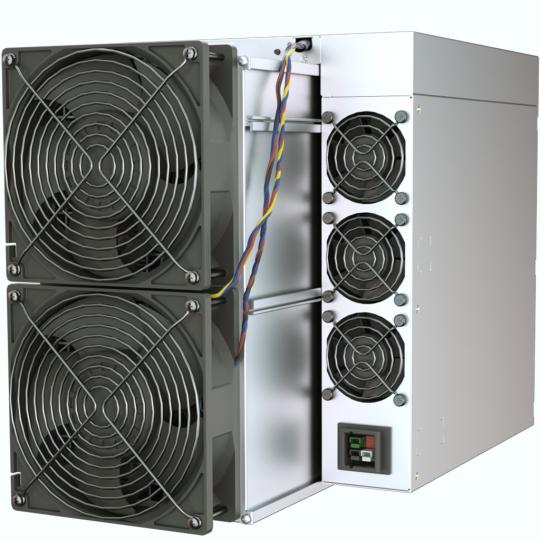
For the Antminer S21 Pro listed at 15 J/TH, at $0.07 per kWh, that is $0.0252 per TH per day. Multiply by its 234 TH/s and the whole machine costs $5.90 a day to run at the wall (3510 W over 24 hours), before pool fees, cooling or hosting fees.
Power cost per TH/s for six catalog miners
Every number below comes from our live catalog specs; the electricity rates are assumptions you can replace.
| Miner | Efficiency | Price (catalog) | Price per TH/s | Power cost per TH/day at $0.04 | at $0.07 | at $0.10 |
|---|---|---|---|---|---|---|
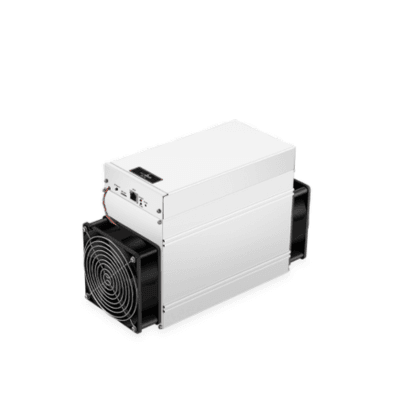
| Antminer S9k 13.5Th/s | 85 J/TH | $389 | $28.81 | $0.0816 | $0.1428 | $0.2040 |
| Whatsminer M60S | 18.4 J/TH | $2250 | $12.10 | $0.0177 | $0.0309 | $0.0442 |
| Avalon A15 | 19 J/TH | $2700 | $13.85 | $0.0182 | $0.0319 | $0.0456 |
| Antminer S21 Pro | 15 J/TH | $4950 | $21.15 | $0.0144 | $0.0252 | $0.0360 |
| Avalon A1566HA | 11.3 J/TH | $2520 | $5.25 | $0.0108 | $0.0190 | $0.0271 |
| Antminer S23 Hydro | 10.5 J/TH | $8100 | $15.58 | $0.0101 | $0.0176 | $0.0252 |
Read it row by row. If today's hashprice is lower than the figure in your rate's column, that miner is losing money on power alone. If it is higher, the gap is your daily gross margin per TH/s, and the purchase price divided by that margin is your payback time.
Payback: the second half of the calculation
Treat the result as a snapshot. Hashprice moves with Bitcoin price, difficulty and fee revenue, and every halving cuts block rewards, so a payback that looks fine today can lengthen. That is why a low break-even matters more than a big hashrate: a machine with a low power cost per TH/s stays above water when hashprice drops.
What the table says about buying decisions
Use it with our calculators
The /profitability page runs this comparison with live network inputs. For a shortlist by algorithm and budget, see the Bitcoin miners collection and the comparison tool. Our regional guides apply the same method to real tariffs, for example ASIC profitability in the UAE.
Worked example: one miner, five hashprice levels
Take the Antminer S21 Pro: 234 TH/s, 3510 W, listed at $4950. At $0.07 per kWh its power cost is $0.0252 per TH per day. The table shows what the machine would earn per day at five example hashprice levels. These hashprice values are illustrative inputs, not a forecast or a statement of today's market.
| Illustrative hashprice ($/TH/day) | Margin per TH/day | Machine margin per day | Payback on purchase price |
|---|---|---|---|
| $0.030 | $0.0048 | $1.12 | 4407 days |
| $0.040 | $0.0148 | $3.46 | 1429 days |
| $0.050 | $0.0248 | $5.80 | 853 days |
| $0.060 | $0.0348 | $8.14 | 608 days |
| $0.080 | $0.0548 | $12.82 | 386 days |
The pattern matters more than any single row. Payback stretches out fast as hashprice falls, and below the break-even level it never arrives. That is why the break-even column is a floor: as long as live hashprice sits comfortably above it, the machine is in profit; when it drops toward it, you are working for the utility company.
Break-even chart by efficiency tier
You can read the same relationship as a chart. This table shows the hashprice a miner needs just to cover power, for common efficiency levels, at three electricity rates.
| Efficiency | Break-even at $0.04 | at $0.07 | at $0.10 |
|---|---|---|---|
| 10 J/TH | $0.0096 | $0.0168 | $0.0240 |
| 12 J/TH | $0.0115 | $0.0202 | $0.0288 |
| 15 J/TH | $0.0144 | $0.0252 | $0.0360 |
| 18 J/TH | $0.0173 | $0.0302 | $0.0432 |
| 25 J/TH | $0.0240 | $0.0420 | $0.0600 |
| 50 J/TH | $0.0480 | $0.0840 | $0.1200 |
| 85 J/TH | $0.0816 | $0.1428 | $0.2040 |
Efficiency tiers near 10 to 15 J/TH belong to current-generation machines; figures above 80 J/TH are typical of the oldest SHA-256 units still for sale. Note how an 85 J/TH machine at $0.04 still needs a higher hashprice than a 15 J/TH machine at $0.10.
Common mistakes in miner ROI maths
Bottom line
Do not buy on hashrate or headline ROI. Compute the break-even for your electricity rate first, compare it with live hashprice, and only then look at payback. Everything on this page is a modeled projection using the stated assumptions, not a forecast of earnings.