Why UAE Summers Break the Air-Cooling Math
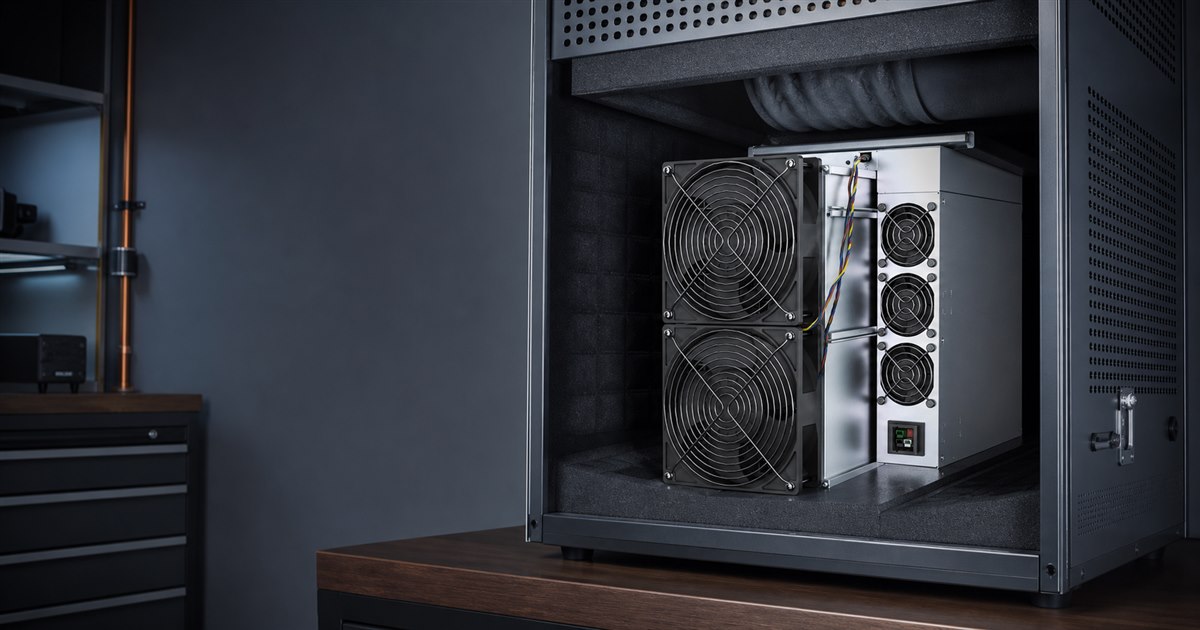
Air-cooled ASIC miners are designed and rated against a moderate ambient temperature baseline. When outside air alone is already pushing 40-45°C, an air-cooled miner has far less thermal headroom to dump heat into — it throttles sooner, runs less efficiently, and puts more sustained stress on components than the same unit would in a cooler climate. For UAE-based home miners, this isn't an edge case — it's most of the year. Dubai and Abu Dhabi summers regularly push outdoor ambient above 45°C from June through September, and an unconditioned room, garage, or balcony setup can run close to that if it isn't actively cooled or ventilated.
What Actually Happens Inside a Miner at 45°C Intake
Two general thermal-engineering facts explain why heat is the dominant constraint for home mining in the Gulf, independent of any single product's spec sheet:
Intake-temperature derating. ASIC hashboards dump heat into whatever air (or liquid) crosses them. The hotter that intake medium already is, the less thermal headroom is left before the chips hit their throttle point, so the miner's firmware pulls back frequency and voltage to protect the silicon. This is standard behavior across the industry, not a defect — but it means the same air-cooled unit that hits its rated hashrate in a 25°C data hall can lose a meaningful, unpredictable slice of that hashrate at 45°C intake without any alarm going off. You keep paying the same electricity bill for less output.
Dust and grit ingress. Hot, dry climates like the UAE's push more airborne dust and fine sand into any device that relies on moving air through it, since low humidity keeps particulates suspended rather than settling out quickly. Air-cooled miners pull that dust through the hashboards along with their cooling air, and it accumulates on heatsinks and fan blades over months, gradually reducing airflow and compounding the exact heat problem the fans exist to solve. This is a general characteristic of forced-air electronics in arid environments, not specific to any one manufacturer.
Neither hydro nor immersion cooling is immune to ambient heat entirely — a radiator or a coolant tank still has to reject heat into the surrounding air eventually — but both remove the direct, uninsulated exposure that makes air cooling the weakest link in a Gulf climate.
The Two Real Solutions
Hydro Cooling
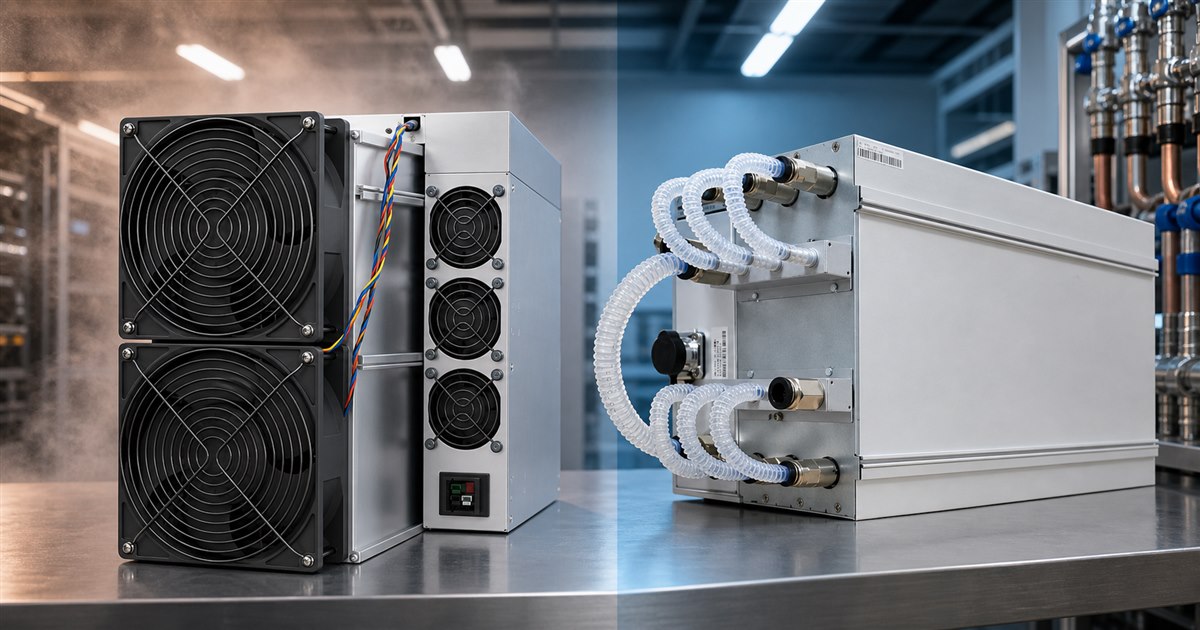
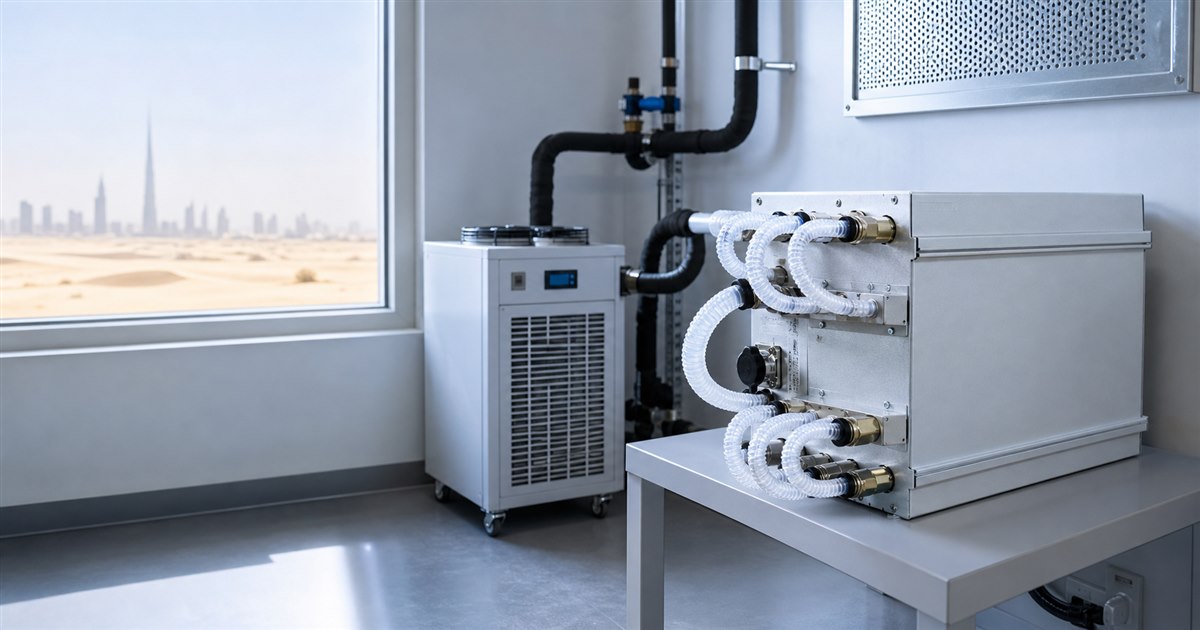
Liquid cold plates pull heat off hashboards directly and route it to an external radiator, largely bypassing the "how hot is the room" problem that limits air cooling. A factory hydro unit like the Antminer S21 Hyd (335 TH/s, 5,360W, 16 J/TH, $5,400) is built around this cold-plate design from the factory rather than as an aftermarket conversion. These manufacturer-rated hashrate, power, and efficiency figures come from Bitmain's own spec sheet — they are not independently bench-tested by us, and actual sustained output depends on firmware settings, coolant flow rate, and where the radiator ends up exhausting heat.
Immersion Cooling
Submerging hardware directly in a dielectric (non-conductive) coolant fluid is the most extreme solution — it eliminates the ambient-heat problem entirely, since the miner never interacts with room-temperature air at all. In the catalog, factory-immersion units like the Avalon A1566I Immersion (200 TH/s, 2,800W, 14.0 J/TH, $2,340) and the Whatsminer M60S Immersion (212 TH/s, 3,906W, 18.4 J/TH, $2,700) arrive pre-configured for tank submersion rather than needing a separate conversion kit. This is a bigger infrastructure commitment than hydro — you still need a tank, coolant fluid, and a plan for rejecting the heat that fluid absorbs — and it's generally reserved for larger home setups or small commercial deployments rather than a single unit.
Air vs Hydro vs Immersion: Real Catalog Numbers
The table below pulls directly from current in-stock listings. The air-cooled Antminer S21 and the immersion-cooled Avalon A1566I sit at almost identical hashrate, which makes them a useful direct comparison: at roughly 200 TH/s, the immersion unit is both cheaper and more power-efficient on paper, largely because it doesn't need the fan array, extra shroud clearance, and airflow-tolerant chip binning that an air-cooled design carries.
| Model | Cooling | Hashrate | Power | Efficiency | Price |
|---|---|---|---|---|---|
| Antminer S21 | Air | 200 TH/s | 3,500W | 17.5 J/TH | $3,150 |
| Avalon A1566I Immersion | Immersion | 200 TH/s | 2,800W | 14.0 J/TH | $2,340 |
| Whatsminer M60S Immersion | Immersion | 212 TH/s | 3,906W | 18.4 J/TH | $2,700 |
| Antminer S21 Hyd | Hydro | 335 TH/s | 5,360W | 16 J/TH | $5,400 |
All specs above are manufacturer figures from the current catalog listing at time of writing, not independently bench-tested by us. Stock and pricing move — check the linked product page for the current figure before ordering.
Cooling-Type Tradeoffs for a Hot Climate
Practical Guidance by Setup Size
1-2 units: A hydro-cooled or factory-immersion miner in a well-ventilated room, ideally with the radiator or tank positioned to exhaust heat outside the living space rather than back into the same room, is usually sufficient and far simpler than building out a multi-unit immersion setup for just one or two machines.
3+ units or a dedicated mining room: Immersion cooling starts making more economic sense at this scale. The tank and coolant cost amortizes across more hardware, and the near-total elimination of ambient-heat sensitivity pays off more when you're running enough units that even a small per-unit efficiency loss would otherwise add up across the whole rack over a summer.
Shipping, Warranty, and Landing a Miner in the UAE
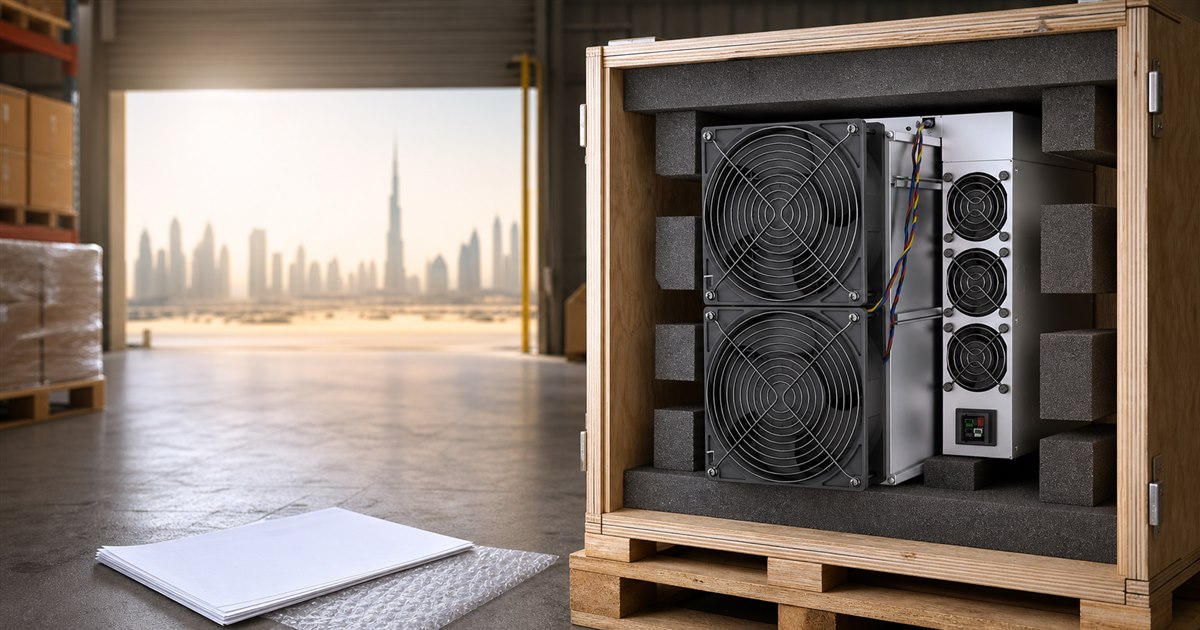
Hydro and immersion units are heavier and bulkier than an air-cooled board of comparable hashrate, which matters for freight into the UAE. We ship worldwide via DHL: a flat $150 on any order, free on orders over $5,000 — a threshold that a single hydro unit or a pair of immersion units clears on its own.
Every unit carries the manufacturer's standard warranty, 6 to 12 months depending on the model, and it can be extended to 18 months through our paid Premium Guarantee at checkout. That extension is worth weighing specifically for hydro and immersion hardware, since a coolant-side fault — a slow leak, a failed pump, a cracked fitting — is a different repair problem than swapping a fan on an air-cooled unit. See /repair-warranty for what's covered under each tier and how a claim gets processed.
If you're weighing whether the extra upfront cost of hydro or immersion pencils out against your local electricity rate, run the numbers through our profitability calculator before ordering. Cooling type doesn't change the hashrate you're paid for on-chain, but it does change how much of your rated hashrate you actually keep running during the hottest months — the variable a generic spec-sheet ROI projection tends to skip entirely.
Browse current in-stock hydro and immersion hardware in the Bitcoin miners collection, or the home miners collection for smaller single-unit options better suited to an apartment or villa setup. For more UAE-specific buying context, see our Dubai Antminer page, the broader Bitcoin mining hardware in UAE guide, and crypto mining in Dubai for setup and import considerations. The full current lineup is always in the shop.
What Happens If You Skip This
Running air-cooled hardware through a UAE summer without addressing ambient heat doesn't just cost efficiency — it shortens hardware lifespan through repeated thermal stress, and can trigger automatic throttling that silently cuts your actual hashrate well below the rated spec. That means paying full electricity cost for reduced output without necessarily noticing, unless you're actively monitoring temperatures and hashrate rather than just assuming the miner is doing what the spec sheet says.