Why ASIC Miners Are So Loud
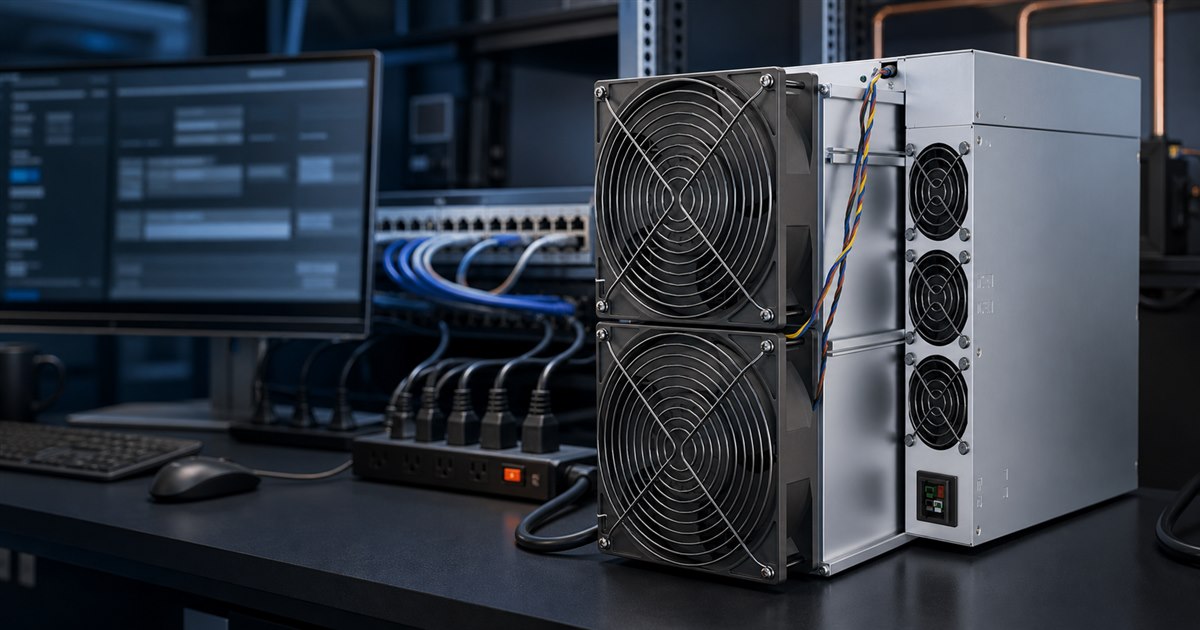
A stock air-cooled ASIC miner keeps its hashboards from throttling by forcing a lot of air through a dense heatsink, which means the fans run at high RPM continuously, for as long as the machine is hashing. Most owners describe it as somewhere between a shop vacuum and a small leaf blower — not because it's occasionally loud, but because it never turns off. For home miners, solving this is usually the difference between a hobby the household tolerates and one that gets shut down by domestic veto.
Noise comes from two sources: the cooling fans (the dominant source by far) and coil whine from electrical components under load. Two physics facts explain why some fixes barely help and others transform a room:
Fan noise scales roughly with the cube of RPM. Cut fan speed by 20% through underclocking or a tighter fan curve, and the noise drop is disproportionately larger than 20% — this is why modest speed reductions feel meaningfully quieter.
The dB scale is logarithmic, and distance is the cheapest tool available. Every 10 dB reduction is perceived as roughly half as loud, and sound pressure falls off with the square of the distance from the source (the inverse-square law) before walls and floors even get involved. Moving a miner from a desk three feet away to a basement forty feet away, behind a door, does more for perceived loudness than almost any single hardware modification — and it costs nothing.
The Real Noise Lever: Cooling Method
Before enclosures, fan swaps, or firmware tuning, the single biggest factor in how loud a miner is at the wall is which cooling method it uses. MinerHaolan stocks the same core models in air, hydro, and immersion configurations where the manufacturer offers them, and the difference isn't subtle — hydro and immersion don't muffle the loud component, they replace it.
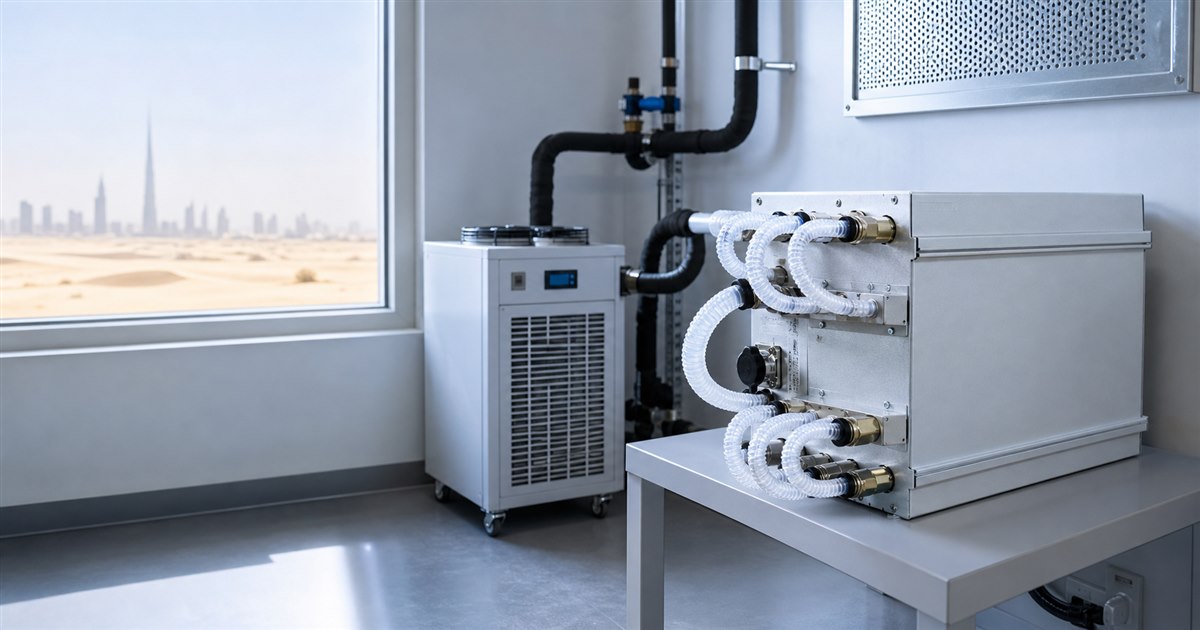
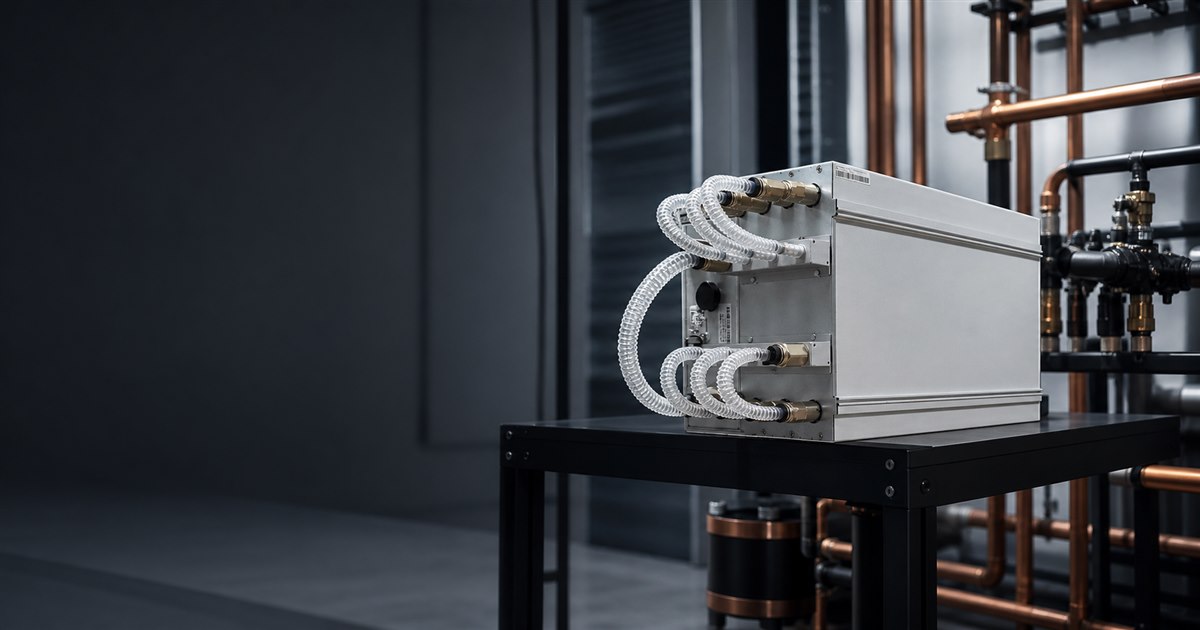
In an air-cooled miner, the noise source is blower fans forcing air through the hashboard heatsinks. In a hydro unit, that fan is gone: heat is carried away by liquid coolant circulating through a water block to an external radiator, driven by a quiet pump — the same principle as a PC watercooling loop, scaled up. In an immersion unit, the hashboards sit submerged in a dielectric fluid that conducts heat away directly, with no fan moving air at all.
| Cooling type | How it dissipates heat | Noise source | Example (MinerHaolan catalog) |
|---|---|---|---|
| Air | Blower fans force air through the heatsink | Fans at high RPM — the dominant noise source in mining | Antminer S21 Pro — 234 TH/s, 3510W, $4,950 |
| Hydro | Coolant circulates through a water block to an external radiator/pump | Only the pump — dramatically quieter than blower fans, no airflow noise | Antminer S21 Hyd — 335 TH/s, 5360W, $5,400 |
| Immersion | Hashboards submerged in dielectric fluid, heat carried away by the fluid itself | Little to none — no fans, minimal pump depending on design | Antminer S21 Immersion — 400 TH/s, 5200W, $6,300 |
The pattern holds across brands, not just Bitmain. Canaan sells the Avalon A1566 as air, hydro (A1566HA), and immersion (A1566I) variants; MicroBT does the same across its Whatsminer M-series. Hydro and immersion versions generally run higher clocked power draw than the air-cooled version of the same silicon, because the cooling method can remove more heat than air can move — which is also why they often out-hash their air-cooled siblings. Browse the current range in the shop.
Since hydro and immersion units address the actual physical noise source instead of working around it, buying one outright is usually a better outcome for a home miner than retrofitting an air-cooled unit — but it isn't the only lever, and it isn't free. Everything below works on the air-cooled machines most home miners actually own.
Practical Noise-Reduction Techniques for Air-Cooled Miners
1. Fan Undervolting and Underclocking (If Firmware Allows It)
Most modern ASIC firmware — stock or third-party tuning firmware — exposes voltage and frequency controls. Lowering both reduces the heat the fans need to remove, which lets the fan curve spin them down. Because fan noise scales with roughly the cube of RPM, even a modest frequency cut produces a disproportionate drop in perceived loudness. The tradeoff is straightforward: less hashrate for less noise, which is a fair trade for anyone prioritizing a livable house over maximum output. Not every model's stock firmware exposes granular fan curves, so check the specific miner's firmware documentation before assuming this option exists.
2. Soundproof Enclosure
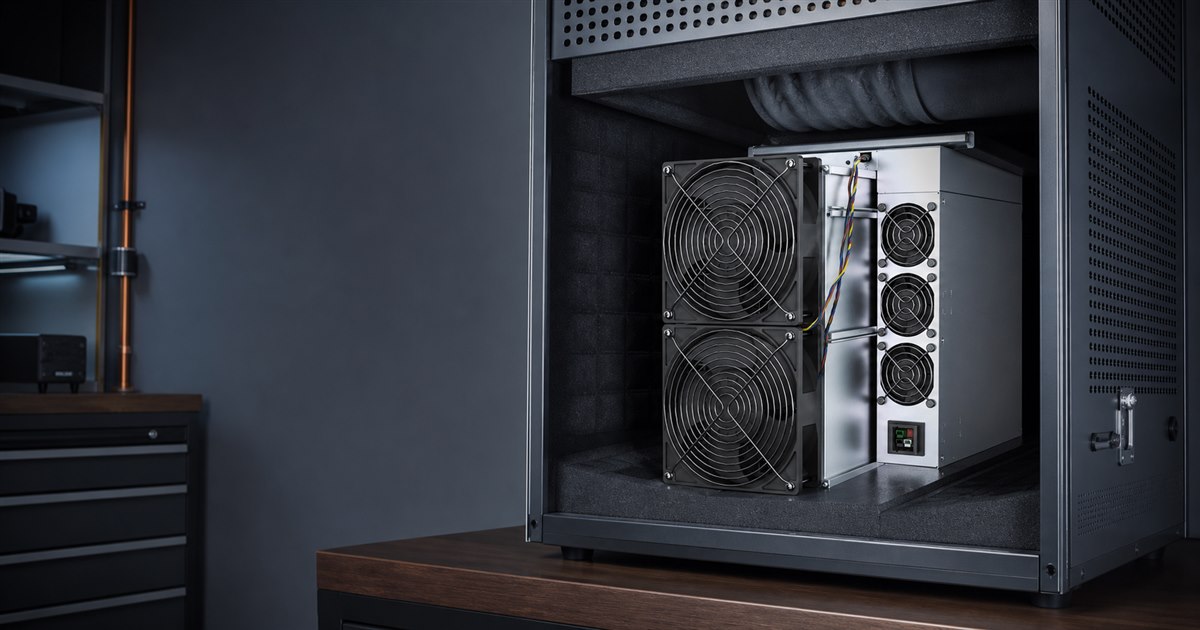
A ventilated enclosure — 3/4" plywood or MDF lined with acoustic foam or mass-loaded vinyl, with dedicated intake/exhaust ducting and its own inline fans to move heat out — absorbs and blocks fan noise before it reaches the room. Mass-loaded vinyl works by adding dense, limp mass that resists vibrating with the sound wave, rather than by absorbing sound directly. The usual failure mode isn't insufficient noise reduction, it's insufficient airflow: get the ventilation wrong and the enclosure cooks the miner instead of quieting it.
3. The Acoustic Silencer Accessory
MinerHaolan carries an ASIC Miner Fan Blower Silencer, 2nd Generation ($99) — a purpose-built acoustic housing that fits over the miner's fan intake to break up and absorb airflow noise at the source, without building a full enclosure. It sits between doing nothing and building a plywood box: less noise reduction than a full enclosure, but a fraction of the cost and no carpentry required.
4. Placement Away from Shared Walls
Because sound pressure falls off with the square of distance, and walls and floors add further attenuation on top of that, where the miner sits often matters more than what's done to the miner itself. A basement, detached garage, or utility closet away from bedroom and living-room walls takes advantage of both effects for the cost of a longer network cable and a habit of checking on it remotely. The tradeoff is the same as the enclosure: an enclosed space still needs real airflow in and out, or heat buildup becomes the new problem.
5. Acoustic Ducting
Rather than letting the miner exhaust hot air directly into the room, flexible ducting with an acoustic liner and an inline silencer box can route exhaust outside through a wall or window. This solves the heat problem and the noise problem in the same install, since the exhaust air leaves the living space entirely instead of just arriving quieter.
Combining Techniques
These stack, and combining two or three of the cheaper options usually gets an air-cooled miner from intolerable to background-noise territory without the cost of switching to hydro or immersion:
None of this is lab-measured for a specific MinerHaolan unit, so treat it as directional rather than a guarantee — the actual result depends on the model, the room, and how well the airflow is engineered. What stays consistent across every technique here is the ranking: distance and cooling method matter more than anything bolted onto an existing air-cooled unit after the fact.
Shipping and Warranty on Hydro and Immersion Units
If switching cooling method is the deciding factor, it helps to know the practical side of buying hydro or immersion outright rather than retrofitting. MinerHaolan ships worldwide via DHL — $150 flat rate, free on orders over $5,000, which a single hydro or immersion unit at this hashrate tier often clears on its own. Every unit carries the manufacturer's standard 6-12 month warranty, extendable to 18 months through the paid Premium Guarantee. Run the numbers on payback timeline for a given power rate on the profitability calculator before deciding between an air-cooled unit plus noise treatment versus paying the premium for hydro or immersion outright.