Why Hong Kong Works for Commercial Mining
Hong Kong combines a common-law legal system, no capital controls on cryptocurrency, and direct access to Bitmain, MicroBT, Canaan, IceRiver and Goldshell's regional distribution channels — MinerHaolan itself is based in a Kwai Chung industrial building for exactly this reason. There is no crypto-specific mining license here, but "no license" is not the same as "no rules." Business registration, electricity contracts, and the building your rigs actually sit in are where a Hong Kong mining farm succeeds or stalls. Here is what actually needs to happen, based on current regulation as of 2026.
Do You Need a License to Mine in Hong Kong?
Short answer: no, not for mining itself.
The Securities and Futures Commission (SFC) licenses Virtual Asset Trading Platforms (VATPs) under a regime in force since June 2023, and it's expanding — in November 2025 the SFC published circulars widening what licensed VATPs can offer, and Hong Kong's Financial Services and the Treasury Bureau is targeting 2026 legislation to bring virtual asset dealers and custodians under an Anti-Money Laundering and Counter-Terrorist Financing Ordinance licensing framework. The Hong Kong Monetary Authority separately licenses stablecoin issuers under the Stablecoin Ordinance, effective August 1, 2025.
None of that reaches mining. Every one of these regimes targets platforms that trade, custody, deal in, or issue virtual assets on behalf of other people — not the act of running ASIC hardware to validate a proof-of-work chain and collect block rewards. If you buy hardware, plug it in, and mine to your own wallet, you are not a VATP, not a dealer, not a custodian, and not a stablecoin issuer. Running the machines is not a licensed activity, and nothing in the SFC's 2025-2026 roadmap changes that.
The perimeter could reach you if you start doing something adjacent to mining but different from it — hosting other people's hardware and payouts, or running something that functions like an exchange for hashpower. That's a dealing-in-virtual-assets question, not a mining question, and it's exactly what the incoming 2026 dealer/custodian regime targets. "We mine with our own machines" stays on the unregulated side of that line — confirm your specific structure with an SFC-experienced lawyer before scaling, since the 2026 rules are still being drafted.
Where You Can Legally Site a Mining Operation
This is the part general "is mining legal" answers usually skip, and the one that actually trips people up: what you're allowed to do inside the building matters as much as whether mining itself is licensed.
Hong Kong's Lands Department ties most industrial buildings to lease conditions restricting use to an actual manufacturing or industrial process. A rack of ASICs converting electricity into hashes is not manufacturing in the sense those leases were written for, and the Lands Department has been explicit that land-use restrictions apply to data centres and cryptocurrency mining set-ups in industrial buildings specifically. If a landlord's lease says "industrial use" and a tenant runs a mining floor without checking what that permits, the Department's enforcement path runs from a warning letter demanding rectification up to lease action — and "we didn't know" doesn't hold once regulators have addressed exactly this use case.
The fix isn't complicated, just not optional:
Business Registration
What Commercial Power Actually Costs in 2026
Electricity is the single most consequential line item in a Hong Kong farm's economics, and the numbers moved for 2026.
CLP (serving Kowloon and the New Territories, where most industrial-zoned mining space sits) reduced its average net tariff by 2.6% to HK$140.6 cents per unit (kWh) effective January 1, 2026 — a Basic Tariff of HK$101.2 cents plus a Fuel Cost Adjustment of HK$39.4 cents. HK Electric (Hong Kong Island and Lamma) cut its average net tariff by 2.2% to HK$163.3 cents per unit, made up of a HK$127.9-cent Basic Tariff and a HK$35.4-cent Fuel Clause Charge.
Two things matter before you build a model around those headline numbers:
Get the all-in effective rate in writing — including demand charges tied to peak load and any dedicated-transformer cost — before committing to a specific machine's economics. Transformer installation is often required once load crosses a threshold, and utility-side infrastructure work can take months to schedule. Once you have a real quoted rate, run it against a specific unit's power draw with the profitability calculator rather than the headline average.
Building Requirements
Tax Considerations
Mining income may be subject to Hong Kong's profits tax (16.5%) — treatment can depend on whether the activity is classified as a trade. Work with a tax advisor experienced in cryptocurrency-specific treatment, since this area moves faster than general tax guidance keeps up with, and keep detailed records of every hardware purchase, electricity invoice, and mined-coin disposal from day one. Reconstructing that retroactively is far harder than logging it as you go.
Hardware for Hong Kong's Climate and Space Constraints
Humidity, noise limits near residential zoning, and floor space built for manufacturing rather than server racks all push toward specific hardware choices. The table below pulls current in-stock units suited to a small-to-mid commercial deployment rather than a full container farm — ultra-compact, hydro-cooled, and immersion-cooled options that manage heat and noise differently.
| Model | Cooling | Hashrate | Power | Efficiency | Price (USD) | Best fit |
|---|---|---|---|---|---|---|
| IceRiver KS0 Ultra | Air, near-silent | 400 GH/s (KHeavyHash) | 100W | 0.25 J/GH | $54 | Testing a site, low-noise corner of an office |
| Canaan Avalon Q | Air, compact chassis | 90 TH/s (SHA256) | 1,674W | 18.6 J/TH | $1,439 | Small commercial unit without full rack infrastructure |
| Antminer S21+ | Air | 216 TH/s (SHA256) | 3,564W | 16.5 J/TH | $3,600 | Standard rack deployment with adequate HVAC in place |
| Whatsminer M60S Immersion | Immersion | 212 TH/s (SHA256) | 3,906W | 18.4 J/TH | $2,700 | Noise-restricted sites near residential zoning |
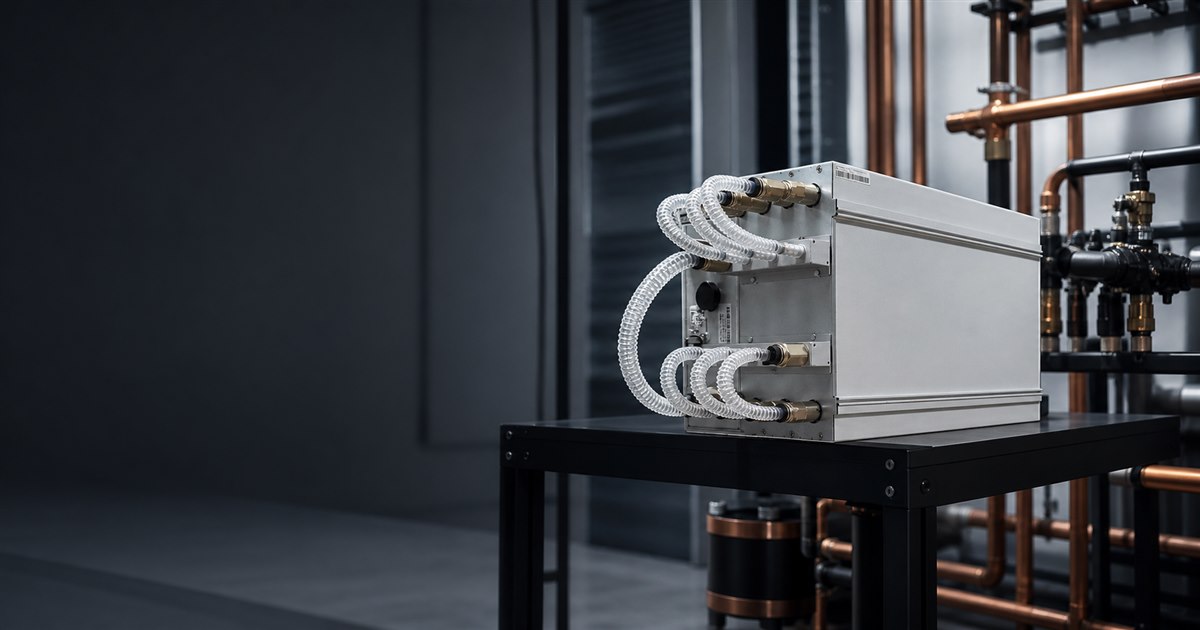
| Antminer S21 Hyd | Hydro | 335 TH/s (SHA256) | 5,360W | 16 J/TH | $5,400 | Humid-climate density — more hashrate per rack |
Air cooling still works in Hong Kong, but it fights the climate rather than working with it — humidity cuts into air cooling's effectiveness in a way it doesn't in a dry industrial region, which is why hydro and immersion units earn their price premium here more than almost anywhere else. All five ship from MinerHaolan's Hong Kong base with worldwide DHL delivery (flat $150, free over $5,000) and manufacturer warranty of 6-12 months, extendable to 18 months through the Premium Guarantee program — worth factoring into total cost of ownership on a farm where a single unit's downtime has real opportunity cost.
Full current specs and pricing for every in-stock model are in the shop.