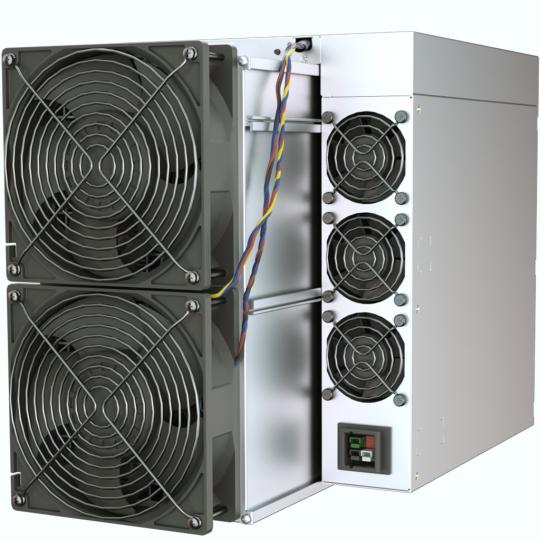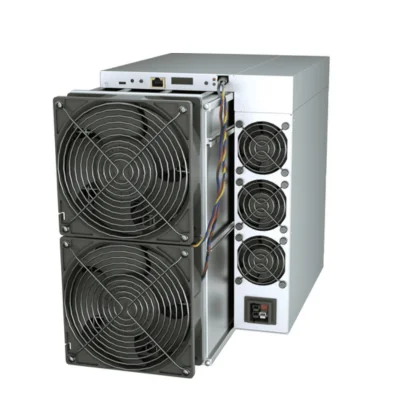
What a Bitcoin Heater Actually Is
A Bitcoin heater is an ASIC miner built or modified for residential use instead of a data-center rack: a form factor meant to sit in a room, firmware and shrouding that spreads heat evenly instead of exhausting it in one hot stream out the back, and, on the purpose-built models, app controls meant for a homeowner rather than a mining-farm operator.
The physics behind it is not marketing. Almost all the electrical power an ASIC draws gets converted to heat — this is standard for any resistive or digital electronic load, the same reason a space heater, a hair dryer, or a gaming PC under load gets warm. A miner pulling 1,000W and producing 37.5 TH/s of hashrate is still putting out roughly 1,000W of heat into the room. The hashrate isn't "instead of" heat, it's a byproduct that comes free with electricity you were going to spend on heating anyway. You're not paying twice for two outputs — you're getting two outputs from one electricity bill.
The Full Lineup, Compared
minerhaolan.com currently stocks six Bitcoin heaters, spanning entry-level to serious hashrate. All ship worldwide via DHL — $150 flat, free on orders over $5,000 — and carry the standard 6-12 month manufacturer warranty, extendable to 18 months through the paid Premium Guarantee.
| Model | Brand | Hashrate | Power | Efficiency | Price |
|---|---|---|---|---|---|
| Antminer S9 Space Heater Edition | Bitmain | 13.5 TH/s | 1,350W | 100 J/TH | $135 |
| Heatbit Mini | Heatbit | 500 GH/s | 500W | 1,000 J/TH | $180 |
| Heatbit | Heatbit | 1 TH/s | 1,200W | 1,200 J/TH | $360 |
| Avalon MINI 3 | Canaan | 37.5 TH/s | 1,000W | 26.7 J/TH | $450 |
| Heatbit Maxi | Heatbit | 39 TH/s | 1,200W | 30.8 J/TH | $540 |
| Heatbit Trio | Heatbit | 10 TH/s | 400W | 40 J/TH | $720 |
Which one for which goal
Budget entry point. The Antminer S9 Space Heater Edition ($135) is a repurposed Antminer S9 in a heat-redirecting shroud. The listing itself is upfront that hashrate is minimal by modern standards — this is the cheapest way to add supplemental heat with a side of BTC hashrate, not a serious profitability play. The Heatbit Mini ($180) is the smallest footprint and lowest power draw in the lineup at 500W, built for small rooms and apartments, and described in its listing as whisper-quiet.
Balanced. The Heatbit ($360) runs at 1,200W and is positioned around aesthetic integration into a living room rather than looking like mining hardware, with mobile app control of temperature and earnings tracking.
Best hashrate per dollar. The Avalon MINI 3 ($450) from Canaan is the standout on pure numbers: 37.5 TH/s at 1,000W with by far the best efficiency in the lineup at 26.7 J/TH. It also has Eco, Super, and Night performance modes, so you can trade hashrate for quieter running when the room is occupied.
Premium and large rooms. The Heatbit Maxi ($540) and Heatbit Trio ($720) sit at the top of the range. The Maxi pushes 39 TH/s at 1,200W for buyers who want the most hashrate the form factor offers. The Trio trades some hashrate for the lineup's best efficiency at 40 J/TH on a lower 400W draw — the listing describes it as the most efficient model in the Heatbit range, aimed at larger residential or small commercial spaces.
Setting It Up
Step 1: Placement
Pick a room that needs heating in winter anyway, not a spare closet — bedroom, home office, or living room. Give the unit clearance for airflow and, where possible, run it near an Ethernet drop. Wi-Fi adapters exist for most of these units, but a wired connection is more stable for a device meant to run continuously.
Unlike a rack-mounted industrial ASIC, none of these six need a dedicated vented closet or ducted exhaust — heat staying in the room is the entire point, not a problem to solve. The design consideration that does matter here is noise, covered below.
Step 2: Power and Wiring
All six units run on standard household power, either 110V or 220-277V depending on model, with no special electrical work needed for a single unit. If you're running one continuously through a heating season, put it on its own circuit if you have the option. A smart plug is a cheap way to add remote power-cycling and rough usage monitoring without touching the miner's own firmware.
Step 3: Network and Pool
Connect via Ethernet, find the device's IP address in your router's admin panel, and open its web dashboard — the Heatbit models and the Avalon MINI 3 also offer mobile app control. From there, point it at a mining pool; Braiins Pool, F2Pool, and Foundry USA are all solid, well-documented options for a first setup. Enter your BTC payout address once and the device mines to it continuously from then on.
Step 4: Monitor and Adjust
Check hashrate and temperature after the first 24 hours to confirm the pool is receiving shares. On models with performance modes, such as the Avalon MINI 3's Eco/Super/Night settings, drop to a quieter mode overnight or whenever the room is occupied and you don't need maximum heat output.
Noise and Placement
Every product in this lineup makes a noise claim, but none of the listings publish a measured decibel spec, so treat any specific "35 dB" or "40 dB" figure you see elsewhere as a marketing estimate rather than a lab measurement. Here's what each catalog listing actually says, model by model:
In practice, put any of these where a box fan or a PC under load would already be tolerable. A bedroom overnight is a reasonable fit for the quieter-rated models; a home office during the day works for all of them. If noise matters more to you than raw hashrate, the Mini and the Trio are the two whose own listings specifically call out quiet running. If you want maximum hashrate and don't mind the fan profile of a higher-wattage unit, the Heatbit Maxi is the one to look at.
The Real Economics
A Bitcoin heater doesn't make heating free. You still pay for every watt-hour of electricity it draws, exactly like a normal space heater. What changes is that some of that spend comes back as mined Bitcoin instead of nothing.
Illustrative example only — this is a projection, not a promise, and the real number depends entirely on Bitcoin's price and network difficulty at the time you actually run the device. Take the Avalon MINI 3: 37.5 TH/s at 1,000W. If you assume a hashprice of $0.04 per TH/s per day — a round, illustrative figure; check a live hashprice tracker for the current rate before you buy, since it moves with BTC price and network difficulty — that works out to:
37.5 TH/s × $0.04/TH/day ≈ $1.50/day, or roughly $45/month in mined value, before electricity cost.
At a typical residential electricity rate, running 1,000W continuously costs roughly $50-75/month depending on your local price per kWh. Under this illustrative assumption, the mined value offsets a meaningful share of that — you're not "making money" in a profit sense, you're paying a discounted rate for heat you needed regardless. Change the hashprice assumption up or down and the offset moves proportionally with it. Run the same math with your own electricity rate and a current hashprice figure before you buy, and check the profitability calculator for a fuller picture across models.
Where This Makes Sense — and Where It Doesn't
Makes sense:
Makes less sense:
Shipping and Warranty
All six heaters ship worldwide via DHL — $150 flat, free on orders over $5,000. Each carries the standard 6-12 month manufacturer warranty, with the option to extend to 18 months through the paid Premium Guarantee at checkout. See the full range on the Bitcoin Heaters page, or browse everything currently in stock in the shop.