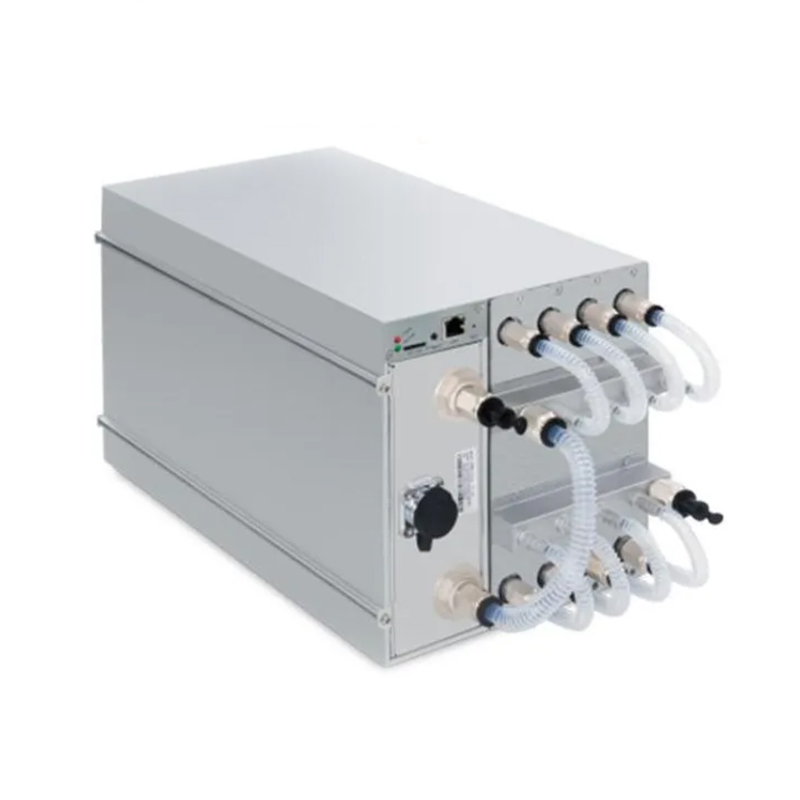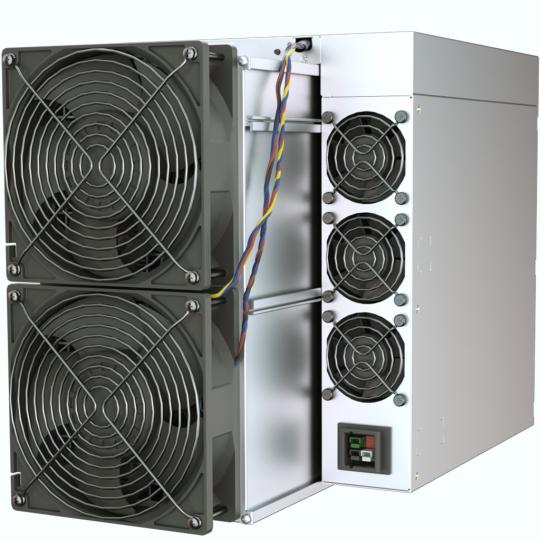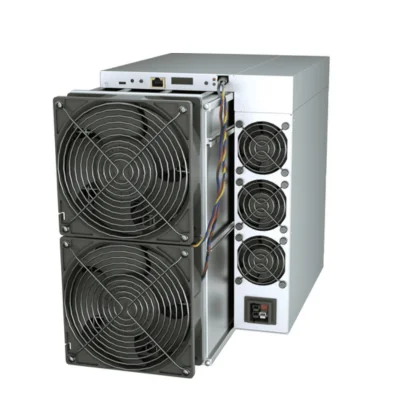
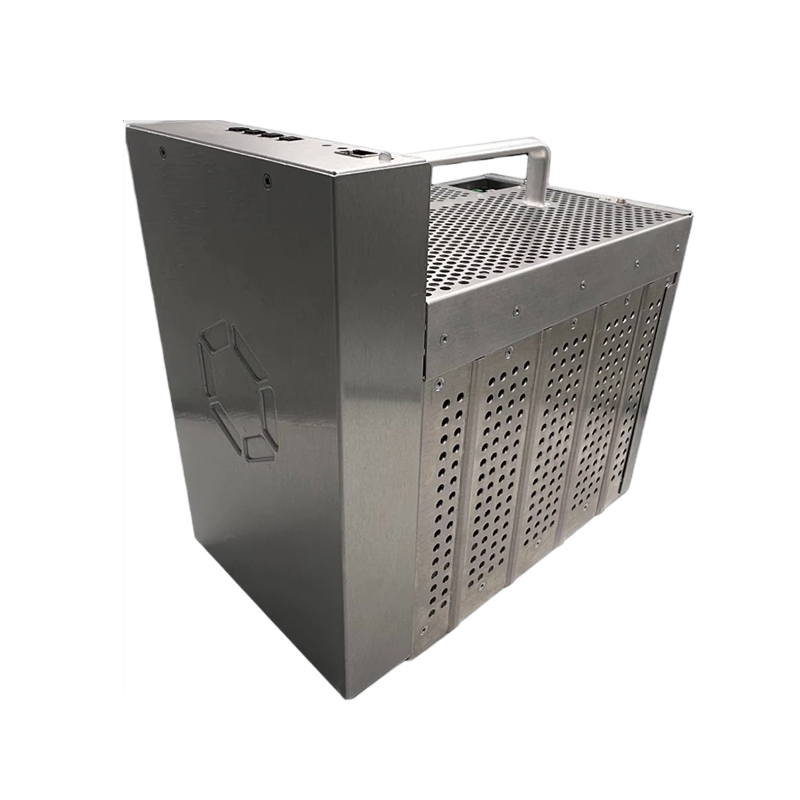
A customer in Surabaya recently asked us about running an "Avalon A15 203T" on 220V power. The short answer: Canaan's own storefront doesn't sell a unit called the A15XP-203T. It sells the A15XP-206T and A15XP-209T. "203T" almost certainly refers to a lower-binned grade of the same A15XP hardware — some resellers describe the A15XP family as spanning 203T/206T/209T at roughly 17.8 J/TH, with the number reflecting which chips came off the production line stronger. If you were quoted "203T" by a reseller, ask which SKU that maps to before you buy — don't assume it's interchangeable with what we list as the 206T.
That question comes up often enough, and is specific enough to Indonesia, to be worth answering properly: what Canaan actually ships in the A15 family, whether any of it runs on Indonesian household power, how to keep it cool in Surabaya's climate, and what customs will actually charge to land one there.
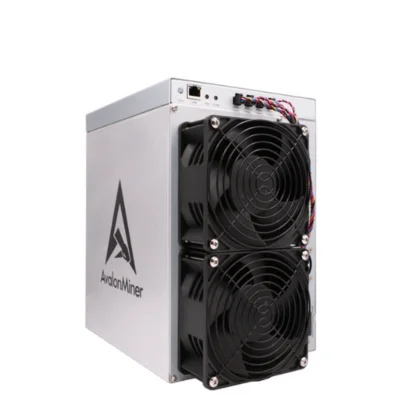
Is There Really an Avalon A15 203T?
No — not as a standalone Canaan product page. Canaan's Avalon lineup includes the base A15 (194T/200T), the A15 Pro (215T/218T/221T), and the A15XP (206T/209T). There's no A15-203T or A15XP-203T listed on Canaan's own shop.
Third-party resellers, though, commonly describe the A15XP as a binned family: 203T, 206T and 209T variants cut from the same chip design, all rated around 17.8 J/TH efficiency. Not every chip on a wafer performs identically — the strongest bins get sold as the higher-hashrate SKU (209T), the weaker ones as a lower-hashrate SKU (203T), while the physical unit, PSU and cooling stay the same. That's almost certainly what "203T" refers to.
What this means for a buyer: if a seller quotes a 203T unit, you're very likely looking at the same physical A15XP hardware we stock as the 206T, just a weaker-yielding chip grade. It should behave the same on install, power draw and cooling — but confirm the exact bin and firmware with whoever quoted it. Don't treat "203T" and "206T" as identical without that confirmation.
The Avalon A15 Family, Compared
Here's what MinerHaolan currently has in stock across the A15 and A1566 range, pulled straight from the live catalog:
| Model | Hashrate | Power | Efficiency | Price | Cooling |
|---|---|---|---|---|---|
| Canaan Avalon A15XP Bitcoin Miner | 206 TH/s | 3667W | 17.8 J/TH | $1,389 | Air |
| Avalon A15 | 195 TH/s | 3700W | 19.0 J/TH | $2,700 | Air |
| Avalon A15 Pro | 250 TH/s | 4350W | 17.4 J/TH | $3,150 | Air |
| Avalon A15 XP | 270 TH/s | 4650W | 17.2 J/TH | $3,600 | Air |
| Avalon A1566 | 185 TH/s | 3420W | 18.5 J/TH | $1,890 | Air |
| Avalon A1566I Immersion | 200 TH/s | 2800W | 14.0 J/TH | $2,340 | Immersion |
| Avalon A1566HA | 480 TH/s | 5400W | 11.3 J/TH | $2,520 | Hydro |
One honest flag before you order: our catalog currently carries two separate listings under the A15XP name — "Canaan Avalon A15XP Bitcoin Miner" (206 TH/s, $1,389) and "Avalon A15 XP" (270 TH/s, $3,600) — with different hashrate, efficiency and price. The 206 TH/s figure matches Canaan's own published A15XP-206T spec sheet. The 270 TH/s listing doesn't match any A15XP bin Canaan or its resellers currently publish; the documented range tops out around 209-212 TH/s. We're not going to guess which listing is mislabeled in a post that's supposed to be accurate — if either A15XP row interests you, confirm the exact model, bin and current price with MinerHaolan directly before ordering.
Will It Run on Indonesia's 220V Power?
Yes, with a caveat worth reading rather than skipping. Indonesia's national electrical standard (SNI 04-3892.1.1-2003, based on PLN's SPLN 1:1995) sets household and light-industrial supply at 230V, 50Hz — the same supply still commonly called "220V" under the earlier PLN standard. In practice, measured voltage in Indonesian homes and small industrial connections typically falls in the 220-230V range, with a tolerance band that puts the practical range around 198V-242V.
Most ASIC miner power supplies, including Canaan's for the A15 family, are rated for roughly 200-240V input, so Indonesia's supply sits comfortably inside spec. That's genuinely good news — you should not need a step-up transformer or voltage converter for a standard single-unit deployment.
The caveat: check the PSU rating label on the specific unit you receive before powering it on. Rated input ranges can vary slightly by hardware revision, and running a farm-scale setup (multiple units on one circuit) is a different calculation from a single machine. At that point you're likely looking at a dedicated three-phase connection (380-400V, 50Hz in Indonesia), which is a conversation for an electrician, not something to wing.
Cooling an Avalon A15 in Surabaya's Climate
This is the part of the question that actually depends on where in Indonesia you're mining, and Surabaya's numbers are specific enough to matter. East Java's climate runs 31-35°C ambient, with humidity averaging around 80%, hottest in September and October. Most air-cooled ASICs, the A15 family included, are rated to operate up to roughly 35°C intake — which means a Surabaya deployment can be running at or near the miner's rated ceiling on an ordinary afternoon, before you've accounted for a hot equipment room or poor airflow.
That doesn't rule out air cooling, but it removes the margin for error:
For a single unit in a Surabaya home or office, air-cooled with real attention to airflow is the realistic starting point. If you're scaling past one or two machines, immersion is the more defensible choice for Surabaya's climate specifically — not a generic recommendation, but one driven by the humidity and heat numbers above.
Shipping, Duty and Warranty to Indonesia
Shipping. MinerHaolan ships worldwide via DHL — a flat $150 for standard orders, free for orders over $5,000. The Hong Kong–Indonesia air-freight lane has gotten faster since DHL added a direct Hong Kong–Jakarta freighter route (4x weekly) in October 2024. DHL doesn't publish an exact day-count for this specific lane, but describes Jakarta and Surabaya as reliably served, unlike remote islands.
Import duty and VAT. Under Indonesia's consignment-shipment rule (Peraturan Menteri Keuangan No. 199/2019, implemented via PER-02/BC/2020), a courier shipment like a DHL order gets a flat 7.5% import duty on FOB value between USD 3 and USD 1,500. Above USD 1,500, duty is instead assessed per the shipment's HS code as a formal import. VAT (PPN) applies either way at an effective 11% — Indonesia's VAT law sets a 12% statutory rate, but for non-luxury goods (which ASIC miners are) that rate is applied to an 11/12 tax base, making 11% the real effective figure. The old duty-free threshold was USD 75; it was cut to just USD 3 at the start of 2020, so essentially every ASIC order will incur duty and VAT.
One thing we won't do is invent a precise combined figure for your specific order. Indonesia's customs authority (Bea Cukai) hasn't published an HS-code-specific rate for ASIC miners, so the exact duty band your shipment lands in depends on declared value and classification at clearance. Confirm the number with a customs broker or Bea Cukai directly before budgeting a landed cost — the 7.5%/11% figures above describe the general consignment rule, not a guarantee for your specific shipment.
Warranty. Every miner ships with the manufacturer's standard 6-12 month warranty (term varies by model). You can extend coverage to 18 months with MinerHaolan's paid Premium Guarantee at checkout — worth considering, since DHL's flat shipping rate doesn't cover a return shipment for a unit that fails after the manufacturer window closes. Full terms are on our repair and warranty page.